Rainwater for your toilets and washing machine
The Platin In-Direct system collects the rain that falls on your roof, stores it underground and uses it to flush your toilets and run your washing machine, cutting the mains water you use for them. It’s a complete package for homeowners, self-builders and installers: underground tank, filter, pump and header tank package, chosen to work together.
How it works: the in-direct principle
See it explained: What’s the difference between a direct and in-direct rainwater harvesting system? (video)
“In-direct” means your toilets and washing machine aren’t fed straight from the pump. Instead, water goes via a header tank: a small storage tank that sits high up, usually in the loft.
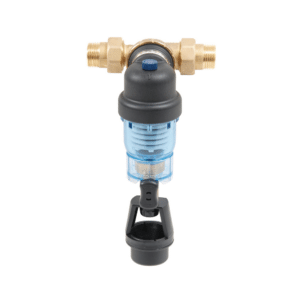
- Rain runs from your downpipes into one pipe and into the underground tank. On the way in, it passes through a filter that keeps leaves and debris out.
- A pressure-sensitive submersible pump sits in the tank and draws water through a floating intake. It pumps rainwater up to the header tank whenever it needs filling. The pump restarts automatically and has dry-run protection.
- From the header tank, water flows down to your toilets and washing machine by gravity, so the pump doesn’t need to run every time you flush. When a toilet is flushed, the header tank supplies it, then the pump tops the header tank back up. It’s all automatic.
The header tank controls the whole system. A dual valve system inside it always uses rainwater first. In a dry spell, when the underground tank is too low, the pump stops. Mains water then fills the header tank instead, through a switchover point set lower down in the header tank, so mains water is only used when there’s no rainwater available. This mains backup doesn’t rely on electricity or the pump, so your toilets always have water, even in a power cut.
Watering the garden
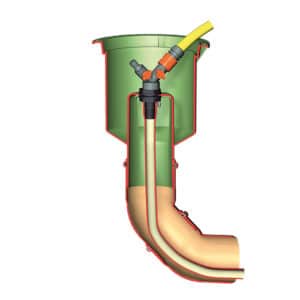
You can also fit an outside tap for garden watering and outdoor cleaning. It’s connected to the pipework directly off the pump with a T-junction, so it runs at pump pressure. Please note: the outside tap isn’t topped up with mains water. When the underground tank is low, the outside tap won’t have water until it rains again.
Choose your size
The Platin is a shallow-dig tank: it’s wide and low rather than tall, so it needs a shallower hole than a traditional upright tank. It’s made from 100% recycled plastic and is installed with gravel backfill rather than concrete, which makes installation simpler and saves around £60 per cubic metre. Platin tanks are trusted across Europe for their reliability in rainwater harvesting.
| Capacity | Length | Width | Height to tank shoulder | Weight |
|---|---|---|---|---|
| 1,500 litres | 2,100mm | 1,250mm | 700mm | 80kg |
| 3,000 litres | 2,450mm | 2,100mm | 735mm | 170kg |
| 5,000 litres | 2,890mm | 2,300mm | 950mm | 240kg |
| 7,500 litres | 3,600mm | 2,250mm | 1,250mm | 360kg |
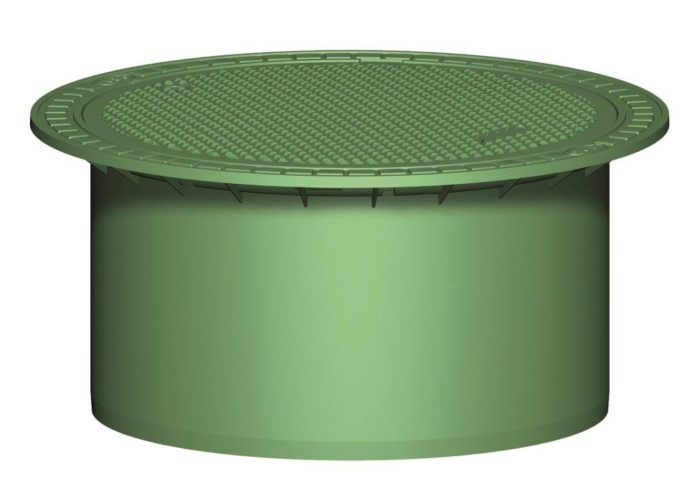
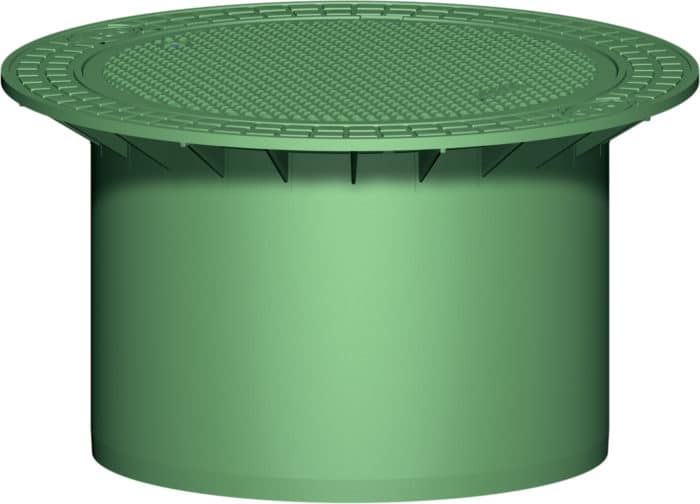
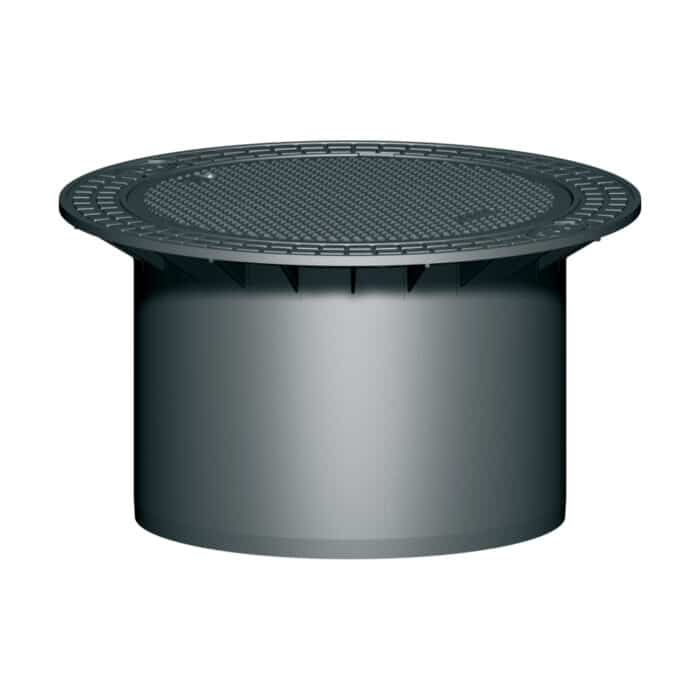
All sizes have an 800mm tank dome with a 315mm dome collar. Choose a pedestrian lid for lawns and garden areas, or a vehicle lid if the tank will go under a driveway.
Useful links
- Prefer a pressurised supply straight from the pump, without a header tank? See the Platin Direct system
- Short of space for a wide tank? See the Carat In-Direct system (2,700–6,500 litres)
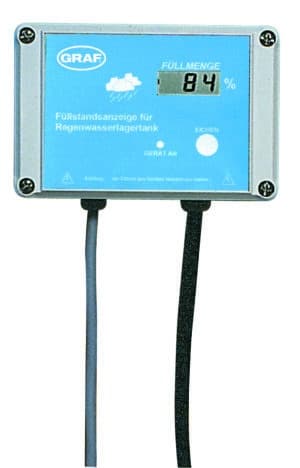
- Add a Digital Level Indicator to see how much water is in the tank
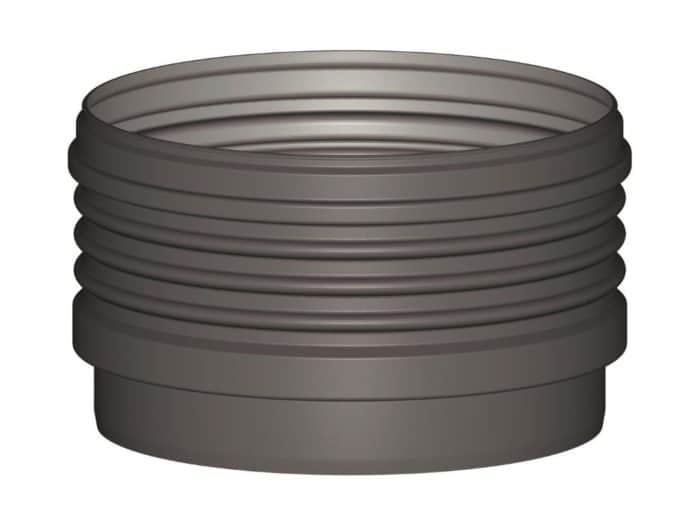
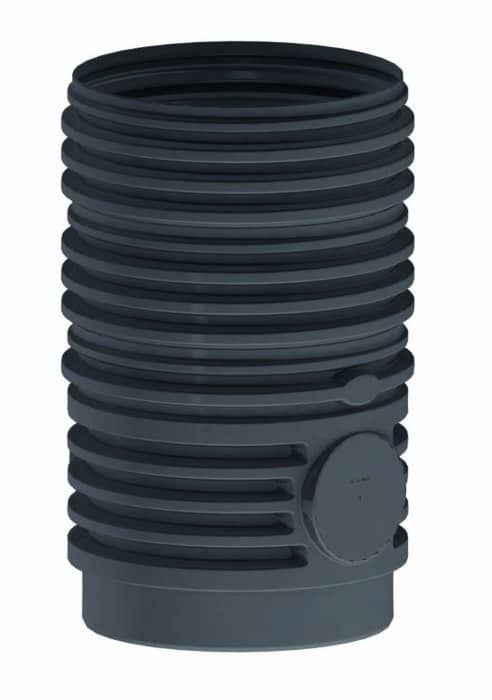
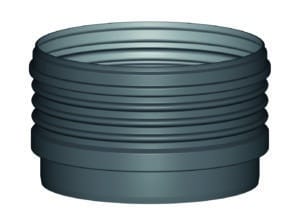
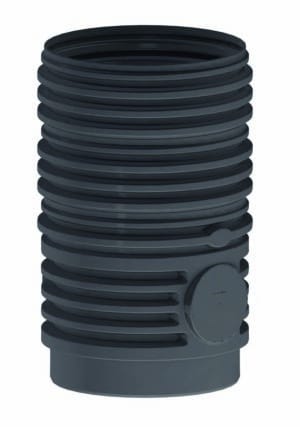
- Tank going in deeper? Add an Extension Piece
- Not sure which system you need? Read our guide: Comparing rainwater harvesting systems: direct, indirect and garden-only
- What does a rainwater harvesting system supply in your home?
- What happens when there’s no rain and the tank runs out? (video)
- Work out the right tank size with our rainwater harvesting tank size calculator
Images are for illustration; components may be upgraded or replaced with equivalent alternatives.