


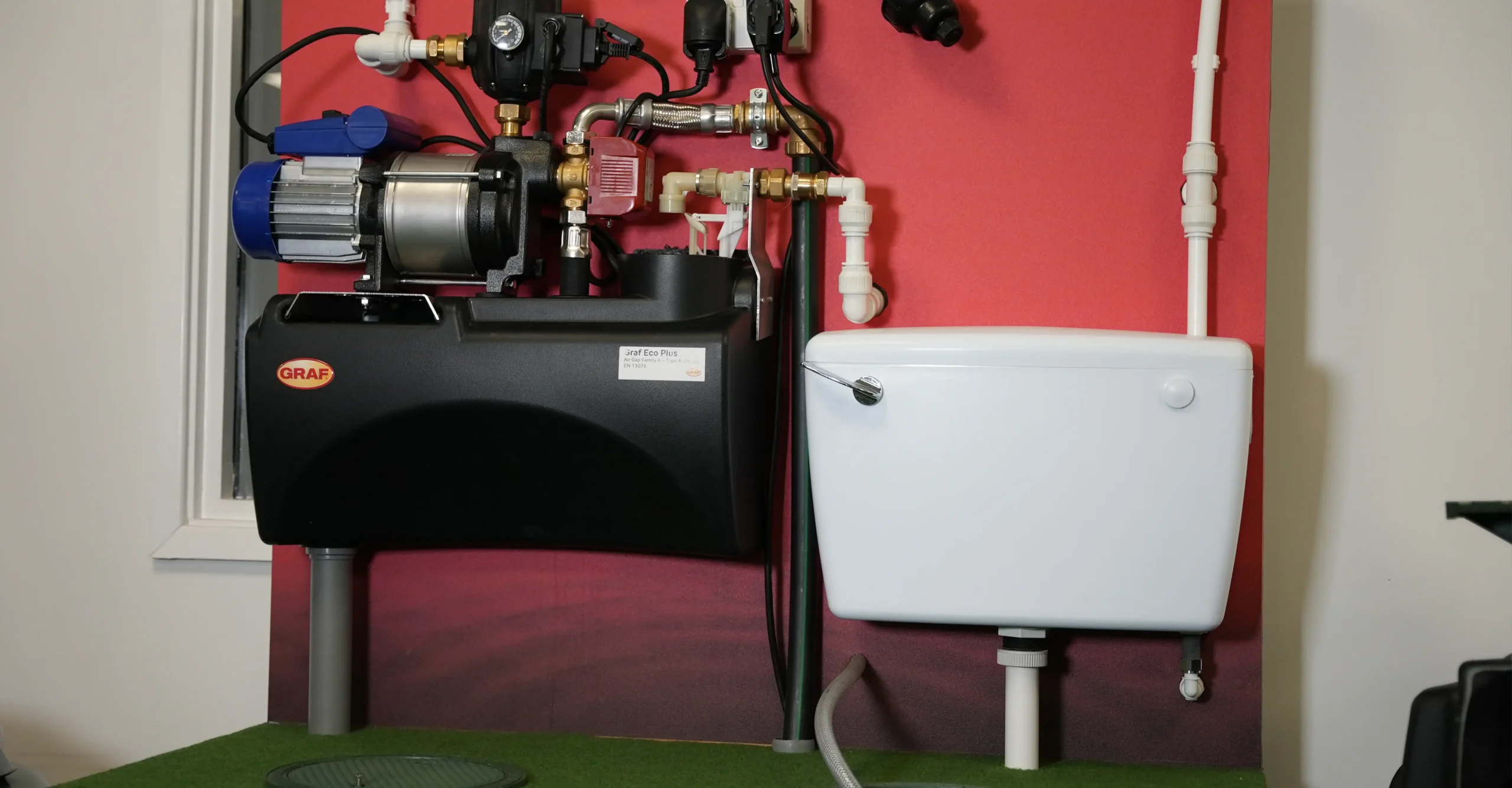
A Type AA air gap is a non-mechanical backflow prevention arrangement that uses a physical separation between the mains water inlet and the spillover level of a receiving vessel. In the GRAF AA system, mains backup water is routed through a separate internal cistern rather than directly into the underground tank. This is a common compliance approach for rainwater harvesting systems that supply toilets and washing machines, and because the arrangement is physical and inspectable, it tends to support a clearer Building Control process for self-builders.
If you have been looking at rainwater harvesting systems and found yourself reading about AA air gaps, Category 5 Protection, and backflow prevention, you are not alone. The compliance side of rainwater harvesting is one of the most common sources of confusion for self-builders, and the terminology does not help. This post explains what an AA air gap actually is, why water authorities care about it and why the GRAF AA system is named after it.
Why does rainwater harvesting need to comply with water regulations at all?
The short answer is that when harvested rainwater is connected to the internal plumbing of a home, it shares infrastructure with the mains drinking water supply. The two supplies need to be kept completely separate at all times, because contaminated water getting into the mains supply is a serious public health risk.
The Water Supply (Water Fittings) Regulations 1999 are the legal framework that governs this in England and Wales. They set out how different categories of water must be handled, and what physical barriers or protection measures are required to prevent cross-contamination. Any rainwater harvesting system that supplies toilets or washing machines is likely to constitute notifiable work under Regulation 5, which requires notification to the local water company before installation begins. Whether a specific installation triggers this requirement depends on the exact scope of work, and your installer will be able to confirm this for your project.
This is not unusual or complicated. It is the same regulatory framework that governs any non-standard plumbing connection in a domestic property, and most installers are familiar with the notification process. The regulations do not prevent rainwater harvesting. They set out how it should be done safely.
What is backflow, and why does it matter for rainwater harvesting?
Backflow is the reversal of water flow in a pipe, where water travels back in the direction it came from rather than continuing in the intended direction. In a plumbing system, this can happen when pressure drops suddenly on the mains supply side, drawing water back from whatever is connected to it.
In a rainwater harvesting system, backflow is the mechanism by which harvested rainwater could potentially travel back into the mains drinking water supply if the two were directly connected without adequate protection. Harvested rainwater is classified as a non-potable fluid, meaning it is not suitable for drinking, and the regulations require that it is kept separate from the mains supply at all times.
The Water Fittings Regulations categorise fluid risks on a scale from 1 to 5, where Category 1 is clean mains water and Category 5 is the highest risk of contamination. For rainwater harvesting systems that supply toilets and washing machines, UK guidance generally treats harvested rainwater as a high-risk non-potable fluid, and Category 5 Protection is commonly required for this kind of non-potable connection. The exact classification can depend on system design and how the water is used, and a qualified installer will confirm the requirements for a specific project. Category 5 Protection is the highest level in the framework.
What is an AA air gap and how does it provide Category 5 Protection?
A Type AA air gap is a non-mechanical backflow prevention arrangement that uses a physical separation between the inlet and the spillover level of a receiving vessel. Because it relies on geometry rather than a valve or mechanical component, it provides a robust form of backflow protection with no moving parts to maintain.
For rainwater harvesting systems that supply toilets and washing machines, UK guidance typically treats the arrangement as a high-risk non-potable application that requires the highest level of backflow protection. Because the Type AA air gap relies on a physical and visible arrangement rather than a mechanical device, the compliance basis is inspectable without specialist equipment, which can support a clearer Building Control process. This does not mean approval is automatic or that no documentation is required, but the arrangement is generally well understood by Building Control officers and water company inspectors.
The name AA refers to the air-gap classification used in the Water Fittings Regulations for this type of backflow protection. A Type AA air gap is one of the most widely recognised backflow prevention arrangements in the UK water industry.
How does the GRAF AA system use the air gap in practice?
In a conventional rainwater harvesting system, when the underground tank runs low the mains supply tops it up directly. Mains water enters the tank, mixes with any remaining rainwater, and the tank is no longer exclusively storing harvested water. From a compliance perspective, this creates a more complex arrangement that requires careful design to achieve the necessary level of backflow protection.
The GRAF AA system takes a different approach. When the underground tank runs low, mains water does not enter the tank at all. Instead, it feeds into a small integrated cistern housed within the pump console inside the property. The AA air gap sits between the mains inlet and the cistern, providing the physical separation that achieves Category 5 Protection. The underground tank remains reserved exclusively for rainwater throughout the system’s operation.
This means that the two water supplies, mains and harvested rainwater, are never in the same vessel at any point in the system. The underground tank holds only rainwater. The internal cistern holds only mains backup water. The air gap between the mains inlet and the cistern is the compliance mechanism, and it is built into the pump console as a fixed feature of the design rather than something that needs to be configured on site.
Why can the AA air gap support a clearer Building Control process?
Building Control sign-off for a rainwater harvesting system involves demonstrating that the installation meets the requirements of the Water Supply (Water Fittings) Regulations 1999, including the backflow prevention standard for the fluid category involved.
Because the AA air gap is a physical and visible arrangement rather than a mechanical device, it can be inspected and confirmed without specialist equipment. There are no moving parts, no pressure-dependent valves, and no components that need to be tested under flow conditions. A Building Control officer can see the arrangement and understand how it works without needing to test it under operating pressure.
For self-builders navigating Building Control for the first time, this is a practical consideration rather than a guarantee. The GRAF AA system is designed so that the air gap arrangement is integral to the pump console, which means it is consistent across all installations rather than varying by installer. Having clear, consistent documentation of the arrangement from the outset is the most effective way to support the Building Control process, whatever the specific requirements of the local authority.
Does the AA air gap affect how the system works day to day?
From the occupant’s perspective, the AA air gap is invisible. The system operates automatically, the switchover between rainwater and mains backup is seamless, and there is no action required from the homeowner in either normal operation or during a mains backup period.
The practical consequence of the air gap arrangement is that the underground tank is never topped up with mains water. This means the full storage capacity of the tank is always reserved for rainwater, which improves the system’s collection efficiency, particularly after dry spells when the tank has been running on mains backup and rain returns. The tank is available to receive incoming rainfall, rather than already partially filled with mains water.
For most self-builders, the compliance aspect of the AA air gap is something to understand once and then set aside. The GRAF UK team can talk through the Building Control notification process, the water company notification requirement, and the documentation needed before installation begins.
Find out more about the GRAF AA rainwater harvesting range here.
Posted by Callum Vallance-Poole, on June 22, 2026.